Mark overview: Who is Jesus?

This fall we’re diving into the Gospel of Mark alongside The Chosen TV series. Mark’s Gospel is short, fast-paced, and written in a way that makes us wrestle with the biggest question: Who is Jesus really, and what does it mean that He has authority?
It’s believed to have been written by John Mark, an early disciple. Many think it was probably the first Gospel to be written, and that it was directed mainly to Roman Gentiles—or possibly a mixed audience of Romans and Jews. Mark doesn’t waste time with long introductions. He jumps right in, and his main theme is clear: Jesus is the Son of God.
Throughout the book, different voices declare—or deny—who Jesus is. Mark himself opens by calling Him the Messiah, the Son of God (1:1). At His baptism, a voice from heaven says, “You are my beloved Son” (1:9–11). The unclean spirits recognize Him as the Son of God (3:11), while the religious leaders accuse Him of being possessed by a demon (3:22). Even His own disciples are confused, asking, “Who is this that even the wind and the waves obey him?” (4:41). His neighbors in Nazareth dismiss Him as just a carpenter (6:2–3).
When Jesus asks His disciples who people say that He is they respond telling him what the crowds have been speculating—maybe He’s Elijah, maybe John the Baptist, maybe just another prophet (8:27–28). Jesus then asks the same question of the disciples. Peter speaks for the disciples, making the confession: “You are the Messiah” (8:29). He’s beginning to understand who Jesus is, but he doesn’t yet grasp Jesus's full identity including His divinity as the Son of God.
At the transfiguration there is once again a voice from heaven that affirms Him as God’s Son (9:7). Crowds in Jerusalem hail Him like the Messiah as He enters the city (11:8–9).
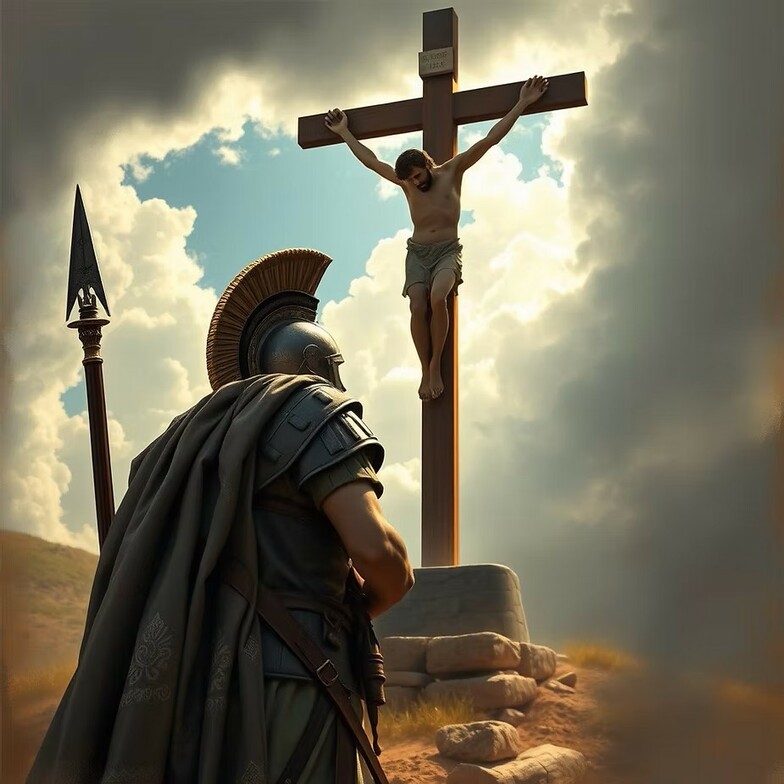
And then, at the cross, comes one of the most surprising declarations. A Roman centurion, an outsider, is the first human in Mark’s Gospel to say it out loud:
“Surely this man was the Son of God” (15:39)
That moment should give us pause. The people who were closest to Jesus—the disciples, the religious leaders, the crowds who followed Him—missed it. But the outsider at the foot of the cross recognized the truth.
It’s a reminder for us too. We can be around Jesus all the time—hearing sermons, reading Scripture, even serving in ministry—and still miss what it means to truly see Him as the Son of God.
If Jesus is the Son of God, His authority isn’t just something we acknowledge—it’s something we submit to. Where in your life might you be treating Him as only an inspiring teacher or prophet, instead of the Son of God with real authority over you?

-
Our Saviour's Evangelical Lutheran Church